Mimosa Hostilis Root Bark: A Guide to Its Botanical Background and Characteristics
Introduction
Mimosa Hostilis Root Bark is a well-known botanical material derived from the perennial tree Mimosa tenuiflora, which is native to regions of Central and South America, particularly Brazil and Mexico. This plant has gained attention in both traditional ethnobotanical studies and modern botanical research due to its unique structure, resilience, and chemical composition. Understanding Mimosa Hostilis Root Bark requires exploring its natural habitat, growth patterns, physical characteristics, and ecological importance. This guide provides a detailed overview of the plant’s background and key features without focusing on any specific use, but instead highlighting its scientific and botanical relevance.
Botanical Classification and Origin
The Mimosa hostilis tree belongs to the Fabaceae family, which is commonly known as the legume family. This family includes many plants that play an important role in soil fertility due to their ability to fix nitrogen. The species Mimosa tenuiflora is widely distributed in tropical and subtropical regions and thrives in harsh environmental conditions such as drought-prone soils.
Mimosa Hostilis Root Bark comes specifically from the root system of this tree, which is known for its strong regenerative properties. The plant is often found in disturbed lands, grasslands, and semi-arid regions where other vegetation may struggle to survive. Its adaptability makes it an ecologically important species in its native habitats.
Natural Habitat and Growth Conditions
The Mimosa hostilis tree grows best in warm climates with well-drained soil. It is highly resistant to drought and can survive in poor soil conditions where nutrients are limited. This resilience is one of the reasons why the plant is widely distributed across certain regions of Brazil and Mexico.
In its natural environment, the tree can grow up to several meters in height and develops a deep root system. The roots are particularly important because they allow the plant to access water during dry seasons. It is from these roots that Mimosa Hostilis Root Bark is harvested after the plant reaches maturity.
The plant also plays a role in soil stabilization. Its root system helps prevent erosion, making it valuable in ecological restoration projects in degraded lands.
Physical Characteristics of the Tree
The Mimosa hostilis tree is relatively small to medium-sized, often growing as a shrub or small tree depending on environmental conditions. It has fine, fern-like leaves that are sensitive to touch and light changes. This movement of leaves is a natural response mechanism known as thigmonasty.
The tree produces small, fragrant flowers that are typically white or cream-colored. These flowers grow in clustered spikes and contribute to the plant’s reproductive cycle. After flowering, the plant produces seed pods that contain several seeds, allowing it to propagate naturally in suitable environments.
The root bark, which is the focus of Mimosa Hostilis Root Bark, is fibrous, dense, and rich in natural compounds that contribute to its durability and unique texture.
Structure and Composition of Root Bark
The root bark of Mimosa hostilis is composed of multiple layers, including an outer protective layer and an inner fibrous layer. The inner bark is typically the part that is harvested for various applications.
From a botanical perspective, the bark contains a range of natural compounds such as tannins, flavonoids, and alkaloids. These compounds play a role in protecting the plant from pests, diseases, and environmental stress. The chemical composition of Mimosa Hostilis Root Bark is one of the reasons it has been widely studied in scientific and ethnobotanical contexts.
The fibrous nature of the bark also makes it structurally strong, which helps the plant survive in harsh environmental conditions. This resilience is a key characteristic that defines the species.
Ecological Importance
Mimosa hostilis is considered an important ecological species in its native regions. It contributes to soil improvement through nitrogen fixation, which enriches the surrounding environment and supports the growth of other plants.
The plant is also useful in land rehabilitation projects. Because it can grow in degraded soils, it is often used in reforestation and ecological restoration efforts. Its ability to stabilize soil and prevent erosion makes it valuable for maintaining ecosystem balance.
Additionally, the plant provides habitat and food sources for various insects and microorganisms, contributing to local biodiversity.
Traditional and Ethnobotanical Context
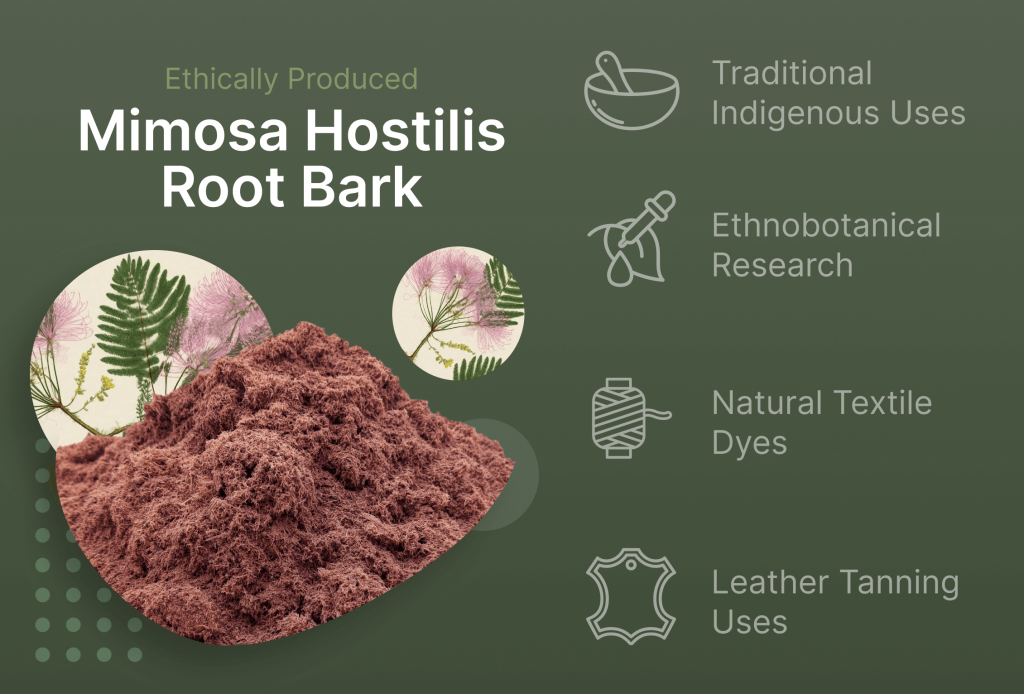
In indigenous cultures, different parts of the Mimosa hostilis plant have been used for various traditional purposes, including natural dye production, skin treatments, and other cultural applications. The root bark in particular has been recognized for its strong pigmentation properties and durability.
While Mimosa Hostilis Root Bark has gained modern attention in global markets, its historical significance is deeply rooted in traditional knowledge systems that have existed for centuries. These cultural uses highlight the long-standing relationship between local communities and native plant species.
Harvesting and Processing Overview
The harvesting of Mimosa hostilis root bark typically involves collecting mature trees or roots in a controlled manner to ensure sustainability. Responsible harvesting practices are important to prevent damage to natural populations and maintain ecological balance.
After harvesting, the bark is usually cleaned and dried under controlled conditions. Proper drying is essential to preserve its structural integrity and prevent degradation. Once dried, it can be processed into different forms depending on its intended botanical or research use.
The quality of Mimosa Hostilis Root Bark is influenced by factors such as age of the plant, soil conditions, and post-harvest handling methods.
Key Characteristics of Mimosa Hostilis Root Bark
Several characteristics define Mimosa Hostilis Root Bark from a botanical perspective:
- Fibrous and durable structure
- Natural brown to reddish coloration
- High density compared to stem bark
- Rich in plant-based compounds
- Strong resistance to environmental degradation
These features make it a unique botanical material that is widely studied in plant science and ecology.
Modern Interest and Scientific Study
In modern times, Mimosa hostilis has attracted interest from researchers studying plant chemistry, natural compounds, and ecological resilience. Scientists analyze its structural properties and chemical makeup to better understand how it survives in challenging environments.
Mimosa Hostilis Root Bark is also of interest in studies related to sustainable agriculture and soil restoration due to the plant’s nitrogen-fixing capabilities and ability to grow in poor soils.
Environmental and Conservation Considerations
As demand for botanical materials increases, conservation and sustainable harvesting practices become more important. Overharvesting or improper collection methods can negatively impact natural populations.
Sustainable management ensures that Mimosa hostilis continues to thrive in its native ecosystems. Many conservation efforts focus on protecting wild populations and encouraging responsible cultivation practices.
Conclusion
Mimosa Hostilis Root Bark is a fascinating botanical material with deep ecological, cultural, and scientific significance. From its resilient growth in harsh environments to its role in soil improvement and biodiversity, the plant represents an important part of tropical and subtropical ecosystems.
Understanding its botanical background and characteristics helps highlight the importance of sustainability and responsible use of natural resources. As interest in plant-based materials continues to grow, informed awareness about species like Mimosa hostilis becomes increasingly valuable for both science and environmental conservation